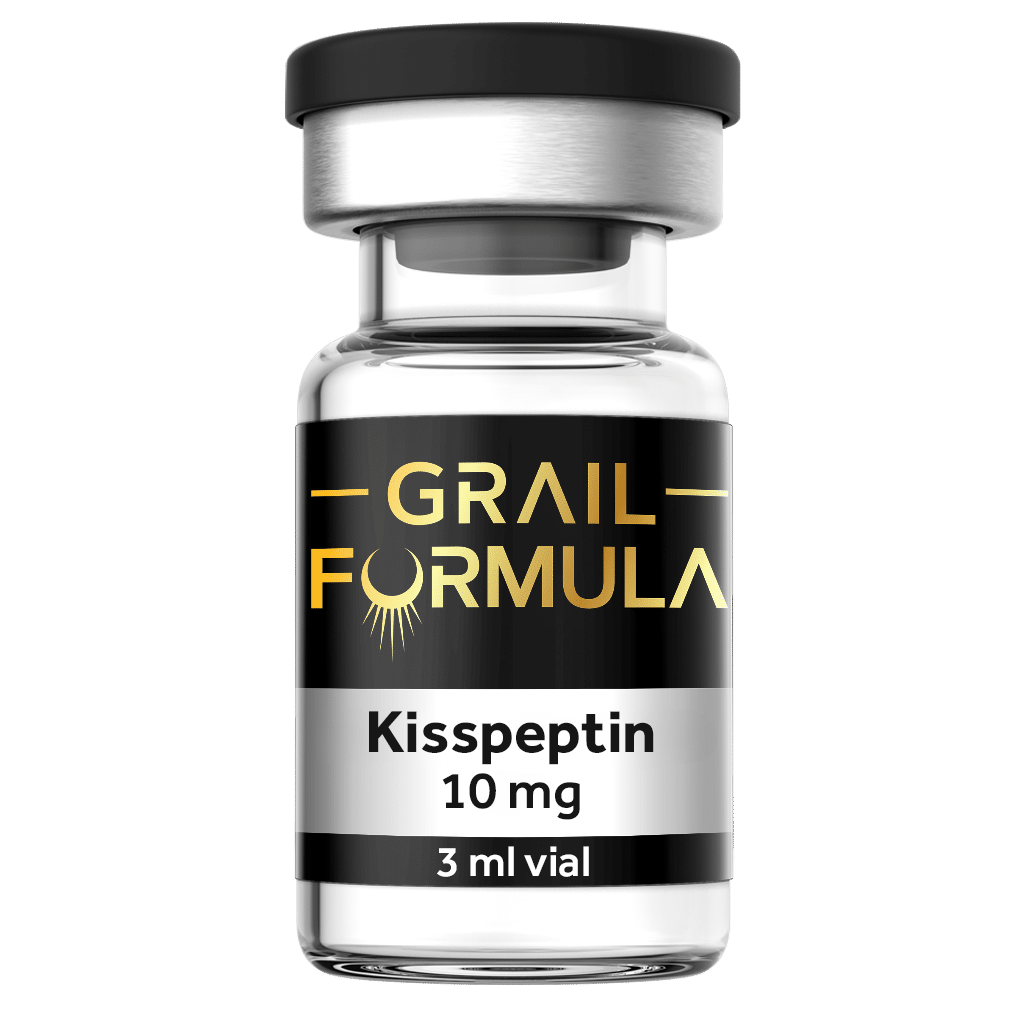
Kisspeptin 10mg
€ 48,76 Original price was: € 48,76.€ 40,50Current price is: € 40,50.
Kisspeptin 10 mg – Grail Formula Quality.
Researched and independently verified by Liquilabs s.r.o. Czechia.
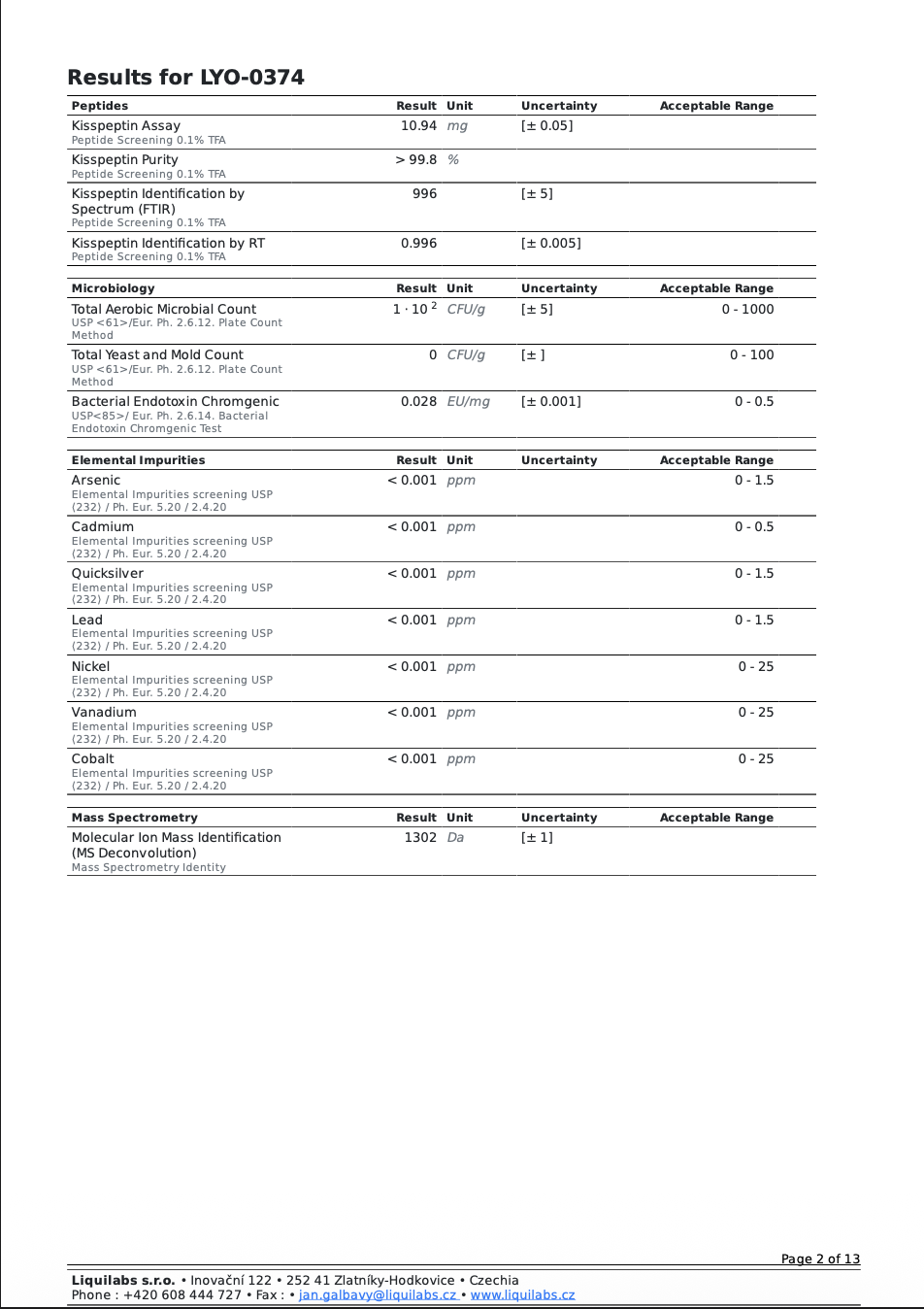
Analytical testing confirms greater than 99.8 % purity, assay content verified at 10.94 mg, molecular ion mass identified at 1302 Da and bacterial endotoxin levels measured at 0.028 EU/mg.
Supplied as a 10 mg lyophilized peptide research compound with full batch-specific COA traceability.
For research use only — not for human or veterinary use.
Availability: In stock: ships within 1 day after payment confirmation.
Volume Discounts – the more you order, the more you save
5%
DISCOUNT
SPEND
€ 250+
10%
DISCOUNT
SPEND
€ 500+
15%
DISCOUNT
SPEND
€ 1.000+
20%
DISCOUNT
SPEND
€ 2.000+
25%
DISCOUNT
SPEND
€ 4.000+
Applied automatically at checkout based on your total cart value.
 | Secure Transaction |
Kisspeptin 10 mg is a high-purity lyophilized peptide research compound supplied exclusively for scientific investigation and controlled laboratory experimentation.
For research use only — not for human or veterinary use.
Product Overview
Kisspeptin is a peptide research compound that has become widely recognised within molecular biology and endocrine research due to its involvement in specialised peptide signalling pathways and receptor-mediated cellular communication. Its defined molecular structure and established role as a signalling peptide have made Kisspeptin an important subject within laboratory investigations involving peptide-receptor interactions, intracellular signalling and biochemical regulatory mechanisms. This preparation contains 10 mg of lyophilized Kisspeptin supplied in a sealed research vial. Independent analytical testing confirmed an assay content of 10.94 mg for this production batch. Lyophilization provides a stable format for storage and controlled preparation within appropriate laboratory environments. With an independently verified purity greater than 99.8 percent, confirmed molecular identity and comprehensive third-party analytical documentation, this Kisspeptin preparation provides researchers with a highly characterised material for controlled scientific investigation.Peptide Overview
Kisspeptin belongs to a family of peptide signalling molecules investigated extensively within endocrine and molecular biology research. Scientific interest in Kisspeptin centres particularly on peptide-receptor interactions and the molecular signalling pathways associated with these interactions. Researchers utilise Kisspeptin in controlled experimental models investigating receptor biology, intracellular communication and peptide-mediated regulatory pathways. Its defined molecular characteristics and extensive presence within peptide research have contributed to Kisspeptin becoming a recognised research compound within studies of cellular signalling and endocrine molecular biology. Modern analytical techniques allow research-grade Kisspeptin preparations to be characterised through complementary methods including chromatographic analysis, FTIR spectroscopy and mass spectrometry, providing multiple analytical points for confirming compound identity and quality.Historical Background and Scientific Context
Kisspeptin research developed from scientific investigation into peptide signalling systems and the molecular mechanisms through which specialised peptides communicate with cellular receptors. Over time, improvements in molecular biology, peptide chemistry and analytical instrumentation have enabled increasingly detailed investigation of Kisspeptin and related peptide signalling pathways under controlled experimental conditions. The development of advanced chromatographic and spectrometric techniques has also significantly improved the analytical characterisation of peptide research materials. Researchers can now assess characteristics including assay content, chromatographic purity, molecular identity, microbiological quality and elemental impurities within individual production batches. Today, Kisspeptin continues to be investigated within research areas involving peptide biology, receptor signalling, endocrine molecular pathways and intracellular communication.Mechanistic Focus in Research
Within controlled laboratory environments, Kisspeptin is principally relevant to investigations involving peptide-receptor signalling and molecular communication pathways. Research areas associated with Kisspeptin may include:- Peptide-receptor interaction studies
- Receptor-mediated signalling research
- Intracellular communication pathways
- Endocrine molecular signalling investigations
- Cellular regulatory pathway analysis
- Comparative peptide research
- Molecular interaction studies
- Controlled biochemical investigations
Analytical Verification (COA)
This batch of Kisspeptin has undergone independent third-party laboratory analysis by Liquilabs s.r.o. Czechia. The analytical programme provides batch-specific information covering assay content, chromatographic purity, identity, molecular ion mass, bacterial endotoxins, microbiological quality and elemental impurities. Batch: GF-KISS19-B242- Labelled Content: 10 mg
- Assay Content: 10.94 mg
- Purity: greater than 99.8 percent
- Identification by FTIR Spectrum: 996
- Identification by Retention Time: 0.996
- Molecular Ion Mass Identification: 1302 Da
- Bacterial Endotoxins: 0.028 EU/mg
- Total Aerobic Microbial Count: 1 × 10² CFU/g
- Total Yeast and Mold Count: 0 CFU/g
Identity and Purity Verification
Peptide purity represents only one component of comprehensive analytical characterisation. For this reason, the Kisspeptin batch has been evaluated using several complementary analytical parameters rather than relying exclusively on a single purity result. Chromatographic analysis reported purity greater than 99.8 percent. Identity assessment was supported through FTIR spectrum analysis and HPLC retention time comparison, while molecular ion mass analysis identified a value of 1302 Da. Assay testing independently measured 10.94 mg of material for the product labelled as Kisspeptin 10 mg. This multi-parameter approach provides substantially more analytical information than purity testing alone and supports transparent batch-specific documentation.Microbiological and Endotoxin Testing
Microbiological quality forms an additional component of the analytical programme used for this Kisspeptin batch. Bacterial endotoxin analysis reported a measured result of 0.028 EU/mg. Total Aerobic Microbial Count was measured at 1 × 10² CFU/g. This result falls within the acceptance criterion stated by the laboratory. Total Yeast and Mold Count was measured at 0 CFU/g. Because measurable aerobic microbial count was reported, this product should not be described as having zero detectable microbial contamination. Grail Formula instead reports the laboratory result transparently and in accordance with the batch-specific Certificate of Analysis.Elemental Impurity Testing
Independent elemental impurity analysis was performed as part of the broader quality verification programme. The tested elements included:- Arsenic
- Cadmium
- Cobalt
- Lead
- Mercury
- Nickel
- Vanadium
Research Applications
Within controlled laboratory environments, Kisspeptin may be utilised as a research material in experimental models involving peptide biology, receptor signalling and molecular communication pathways. Potential areas of scientific investigation include:- Peptide signalling research
- Receptor biology investigations
- Peptide-receptor interaction studies
- Intracellular signalling pathway analysis
- Endocrine molecular biology research
- Cellular communication studies
- Comparative peptide investigations
- Controlled in vitro peptide research
Grail Formula Quality
Grail Formula places particular emphasis on independent analytical verification and transparent batch-specific documentation for its research compounds. For this Kisspeptin production batch, independent laboratory analysis includes:- Assay content determination
- Chromatographic purity assessment
- FTIR spectrum identification
- HPLC retention time verification
- Molecular ion mass identification
- Bacterial endotoxin analysis
- Total Aerobic Microbial Count testing
- Total Yeast and Mold Count testing
- Elemental impurity screening
- Batch-specific analytical traceability
When You Choose Grail Formula
When selecting Grail Formula, researchers receive research compounds supported by transparent, independently generated analytical documentation. We believe research quality should be demonstrated through measurable laboratory data rather than unsupported purity claims. For this reason, batch-specific Certificates of Analysis provide detailed information concerning identity, assay content, chromatographic purity, molecular ion mass, bacterial endotoxins, microbiological testing and elemental impurities. This Kisspeptin batch was independently analysed by Liquilabs s.r.o. Czechia, providing researchers with third-party documentation of the analytical characteristics reported for the tested material. The complete Certificate of Analysis can be made available alongside the product, allowing researchers to review the underlying batch-specific analytical results directly.Storage and Laboratory Handling
Kisspeptin is supplied in lyophilized form for controlled research applications. Appropriate laboratory storage and handling procedures should be used to preserve the integrity of the research material. Researchers should follow established laboratory protocols applicable to peptide research compounds and avoid unnecessary exposure to conditions that may affect compound stability. Any preparation or reconstitution should be performed only within an appropriate controlled laboratory environment by qualified research personnel using procedures suitable for the intended experimental protocol.Research Use Limitation
- Intended solely for laboratory and in vitro research
- Not approved for human consumption
- Not approved for veterinary use
- Not intended for self-administration
- Not intended for diagnostic purposes
- Not intended for therapeutic applications
- Not intended to prevent or treat any disease
- Not permitted for clinical administration
- For research use only
- Independently analysed by Liquilabs s.r.o. Czechia
- Purity greater than 99.8 % confirmed by COA
- Assay content verified at 10.94 mg
- Identity confirmed by FTIR spectrum analysis
- Identification confirmed by HPLC retention time analysis
- Molecular ion mass identified at 1302 Da
- Bacterial endotoxin level measured at 0.028 EU/mg
- Total Aerobic Microbial Count measured at 1 × 10² CFU/g, within the laboratory acceptance criterion
- Total Yeast and Mold Count measured at 0 CFU/g
- Tested heavy metals below the laboratory detection limit of 0.001 ppm
- Complete batch-specific analytical documentation
- Research-grade peptide compound
- For research use only – not for human or veterinary use
For laboratory research only. Not intended for human consumption, injection, or cosmetic use.
This product is for research purposes only. Not for human use or diagnostic/therapeutic applications. Keep out of reach of children.
Third-Party Tested
Public COAs
Batch Verified
EU Shipping