
Bacteriostatic Water
Bacteriostatic water is a key laboratory reagent for reconstituting lyophilized peptides. At 24Peptides you will find BAC Water for peptide research with a clear focus on documented research quality, transparent batch data, and an objective, data‑driven quality standard. For a current overview of available options, see Bacteriostatic-Water products.
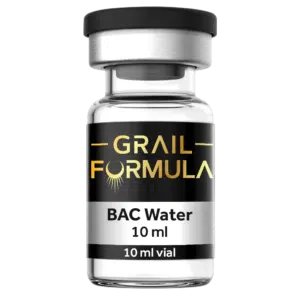

Bacteriostatic Water is a sterile solvent for laboratory use, used in research settings to reconstitute study substances. It is subject to quality control and supplied with corresponding documentation. For research and laboratory use only; not for human or animal use.
Category: Research peptides
If you want to buy bacteriostatic water, the key factors are sterility, a defined composition, and a reliable research‑only context. Our products are intended exclusively for laboratory and research purposes, not for use in humans or animals, and are only available to adult customers aged 18 and over.
What is bacteriostatic water?
Bacteriostatic water, often referred to as BAC Water, is sterile water with 0,9 % Benzylalkohol as a preservative additive. This additive inhibits bacterial growth and makes the product particularly useful in day‑to‑day lab work when more than one withdrawal is intended from a vial.
In peptide research, BAC Water is primarily used to reconstitute lyophilized peptides. What matters is not only sterility itself but also a clear product specification. Those who buy bacteriostatic water are usually not looking for general water for injection purposes but for a defined solvent for controlled research workflows.
Bacteriostatic water or sterile water?
The key difference lies in the preservative. Sterile water contains no bacteriostatic additive and is typically considered single‑use. Bacteriostatic water, by contrast, contains 0,9 % Benzylalkohol and is therefore better suited to situations where multiple withdrawals from the same vial are planned under sterile conditions. A systematic overview can be found in the article Bacteriostatic vs. Sterile Water for peptides.
In practice this means: If you reconstitute a peptide once and need the entire volume directly in the same step, sterile water may suffice. However, if a more stable lab routine with multiple withdrawals is planned, BAC Water is usually the more suitable choice. Regular drinking water or ultrapure water is not an alternative for this purpose, because sterility, specification, and suitability for this use are lacking.
How BAC Water is used in peptide research
For reconstitution, the bacteriostatic water is drawn up with a sterile syringe and added slowly into the peptide vial. It has proven useful to let the liquid run down the glass wall instead of applying it under pressure directly onto the lyophilized material. This wets the powder more gently. You can find a step‑by‑step guide at Guide: Reconstituting lyophilized peptides.
After adding, the solution should not be vigorously shaken. Gentle swirling is usually sufficient. For reproducible results, clean technique, sterile tools, and clear documentation of volume, concentration, and batch number are crucial. The peptide reconstitution calculator can help plan the dilution.
What to look for when buying
When buying bacteriostatic water, you should look beyond the product name. Relevant quality features include a clearly stated composition, sterile filling, batch‑specific documentation, and a transparent supplier who makes specifications traceable. Especially in a research environment, it is important that the origin of the material is properly documented.
24Peptides follows a science‑oriented quality approach with transparent COA documentation, independent lab testing, and clear research‑only compliance. Rather than general marketing promises, we prioritize robust product data, traceable batch information, and a carefully curated range for lab practice.
Storage, shelf life, and important notes
Unopened, BAC Water should be stored cool, dry, and protected from light. After the first withdrawal, sterile technique and controlled storage are particularly important to avoid contamination. Many lab protocols set a limited period of use after the first puncture, often with refrigerated storage and according to the manufacturer’s instructions. Detailed guidelines on storage duration after reconstitution can be found at Shelf life of reconstituted peptides.
Actual usability after opening depends on product documentation, handling, and storage conditions. Bacteriostatic water is intended exclusively for research, analytics, and laboratory purposes. It is not intended for diagnosis, therapy, or use in humans or animals.
Frequently asked questions
Can you buy bacteriostatic water at a pharmacy?
Pharmacies are more likely to offer water for injection purposes than explicitly bacteriostatic water for research purposes. If you specifically seek BAC Water with a defined composition and research‑only declaration, a specialized supplier is usually the more precise point of contact.
What does bacteriostatic mean?
Bacteriostatic means that the growth of bacteria is inhibited. In BAC Water this function is provided by the Benzylalkohol it contains, making the product better suited to sterile multiple withdrawals in a research context than simple sterile water.
How long is BAC Water usable after opening?
That depends on the product documentation and lab handling. As a practical guideline, a limited period after the first puncture is often cited, often with refrigerated storage. However, the respective manufacturer’s instructions and clean sterile handling remain decisive.
How can you recognize good quality when buying?
Look for a clearly declared composition, sterile packaging, traceable batch numbers, and transparent test documents. For research teams, independent lab data and COA documents are also important because they support traceability and consistent workflows.