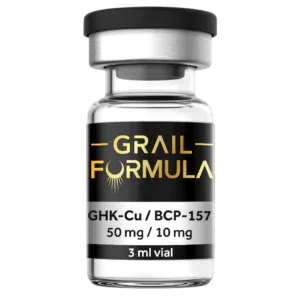
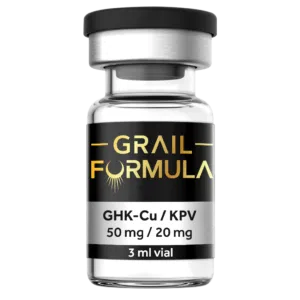
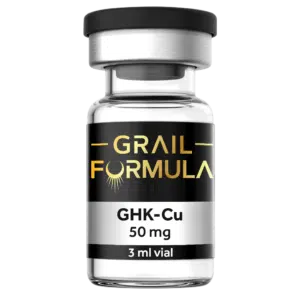
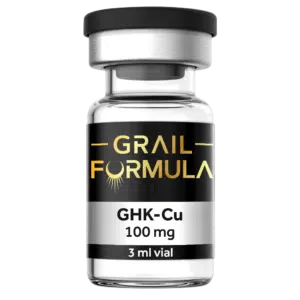
For selection, you should not just look at price, but at the actual product specification. What matters are quantity, product form, purity, proof of identity, and whether the batch is fully documented. Our GHK-Cu products are intended exclusively for in-vitro research, not for humans or animals, and are sold only to persons 18 and older.
What is GHK-Cu?
GHK-Cu is a copper-bound peptide complex based on the tripeptide Glycyl-L-Histidyl-L-Lysin. In the scientific literature, this complex has been studied for decades, especially in connection with metal-peptide interactions, signaling processes, and matrix-related research models. For buyers in the research space, it is above all important that this is a clearly defined substance and not a vague marketing term.
Anyone looking to buy GHK-Cu should therefore distinguish between scientific classification and the actual product specification. Relevant are not only the name of the compound, but also form, concentration, batch number, and the analytics available per batch.
Compare GHK-Cu correctly before purchase
Quantity, product form, and specification
For research peptides, the stated quantity should be read precisely. An mg value describes the amount of substance, whereas volume indications are only meaningfully comparable in the context of the respective formulation. Therefore, always check on the product page whether it is a single compound, what quantity is actually delivered, and what storage or reconstitution notes are provided.
Purity is important, but not decisive on its own
Many providers primarily advertise a high purity value. For reproducible research, however, a single percentage value is often not sufficient. More important is the combination of purity, confirmed identity, clean batch traceability, and additional testing for relevant contaminants. Those who want to order GHK-Cu in Germany benefit far more from clear, batch-specific data than from general advertising claims.
Why full COA transparency makes the difference
24Peptides relies on a data-driven quality approach instead of pure marketing promises. Each batch is independently tested by third-party labs, and the associated Certificate of Analysis documents serve for traceable verification. This is particularly relevant if you procure GHK-Cu for a laboratory, an academic project, or an R&D environment and need to document material quality.
The key point is that quality assessment should go beyond a standard purity specification. Depending on product and batch, professional buyers are especially concerned with identity confirmation, batch consistency, and additional control parameters. This approach supports cleaner material selection, better comparability between suppliers, and more confidence when procuring research-grade peptides.
Storage and handling in the laboratory
GHK-Cu should always be stored and processed according to the product page, label, and batch-specific documents. Depending on the product form, temperature, light protection, and handling after possible reconstitution are decisive for stability. For lab users, clean batch documentation from goods receipt to use is recommended so that material history and experimental conditions remain clearly traceable.
Research purpose, availability, and compliance
Our GHK-Cu products are offered exclusively as research chemicals for in-vitro research. They are not intended as medicinal products, dietary supplements, or products for use in humans or animals. If you wish to buy GHK-Cu in Germany, please additionally observe the locally applicable requirements for possession, use, and import. Responsibility for compliant use lies with the buyer.
For many research buyers, the European supply chain is also a practical advantage. In addition to product quality, transparent documentation, clear intended use, and reliable shipping fulfillment are the key points for an informed purchasing decision.
Frequently asked questions about GHK-Cu
Is GHK-Cu available in Germany?
GHK-Cu can be available in Germany as a research product, provided it is offered with a clear research-only intended use and the respective order complies with the applicable requirements. At 24Peptides, GHK-Cu is offered exclusively for in-vitro research.
Is GHK-Cu legal in Germany?
The legal classification depends on the specific product, the intended use, and the applicable regulations. We do not provide individual legal advice. Buyers should check for themselves before ordering which rules for procurement, possession, import, and use apply to their case.
What does GHK-Cu do in the body?
GHK-Cu is investigated in the scientific literature in various biological contexts, such as signaling and binding processes. However, 24Peptides does not sell GHK-Cu for use in humans or animals. Therefore, we make no health-related or therapeutic statements about personal use.
Why is GHK-Cu not approved?
A research product is not automatically approved for human use. Different regulatory requirements apply to a chemical for laboratory purposes versus an approved medicinal product, cosmetic, or dietary supplement. Our category is clearly limited to research purposes.
Which documents should I review before purchase?
Before buying GHK-Cu, you should at minimum check the batch number, the COA, the details on purity and identity, as well as the notes on storage and handling. This very transparency is crucial if you want to objectively assess and properly document material quality.