
Peptide aggregation: causes, measurement and lab practice
What peptide aggregation is, which conditions trigger it, how it is measured in the lab, and which checkpoints ensure reliable data.
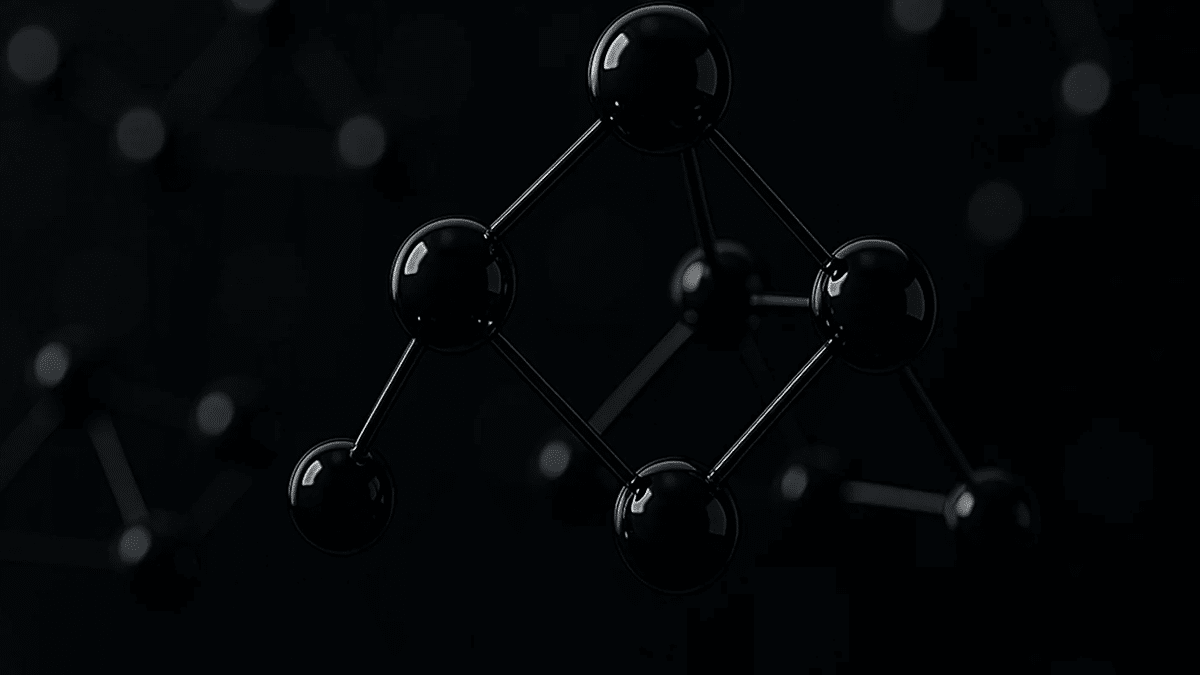
Peptide aggregation
Peptide aggregation describes the stepwise self-association of peptides: single molecules can first form small oligomers and later larger aggregates or fibrillar structures. For stability questions in research this is central, because even small changes in conditions can markedly shift behavior.
Temperature, pH, concentration, ions, and sample handling often significantly affect aggregation kinetics. It is therefore crucial not only to ask whether a peptide aggregates, but when, through which intermediates, and under which laboratory conditions this is observed.
Why peptides aggregate and which aggregates form
Peptide aggregation usually proceeds stepwise from monomeric species via oligomers to prefibrillar forms and larger aggregates. This can be promoted by structural changes or misfolding, for example toward more ordered, often beta-sheet-rich aggregates. These should be distinguished from nonspecific amorphous deposits. How quickly and in what form aggregation occurs depends strongly on sequence features such as chain length, charge distribution, and intermolecular attractive forces.
Which phases aggregation kinetics typically goes through
Typically, there is first a nucleation phase in which initial stable nuclei form. Elongation can then follow, in which existing nuclei grow markedly faster. Early, metastable intermediates such as dimers are often short-lived, but can prime the later formation of higher aggregates or distort measurement signals. Prefibrillar phases in particular are important when the transition from the monomeric state is to be understood. Kinetic curves should therefore not be interpreted as a simple one-step process.
Which conditions promote or slow peptide aggregation
Whether and how strongly a peptide aggregates depends essentially on the experimental conditions.
| Factor | Typical influence | Important control point |
|---|---|---|
| Temperature | Thermal stress can markedly accelerate aggregation and shorten apparent stability times. | Keep incubation temperature and temperature fluctuations constant. |
| pH and ionic strength | Alter charge states and electrostatic interactions between peptides. | Compare only samples with identical buffer. |
| Metal ions | Ions such as copper can affect binding and self-association. | Document trace sources and added ions. |
| Concentration | Above or below critical ranges the same peptide can behave very differently. | Define the concentration range in advance and do not mix; support planning with Peptide dilution calculation. |
| Solvents, buffers and handling | Influence whether more soluble intermediates or larger aggregates dominate. | Standardize vessel type, reconstitution and mixing steps. Note differences when choosing water (Bacteriostatic vs. sterile water). |
How peptide aggregation is measured and assessed in the lab
- Most often the transition from monomers to oligomers and further aggregates is measured, for example via fluorescence signals or via time-dependent changes in molecular size.
- Continuous monitoring is often more informative than a pure endpoint measurement, because fleeting intermediates are otherwise easily missed.
- Early metrics such as Time-to-Dimer and later metrics such as Time-to-Tetramer describe different aggregation stages and can therefore lead to different stability statements.
- Comparable data require a consistent protocol: identical incubation conditions, vessel types, measurement time points, and evaluation criteria.
How aggregation can be practically reduced in research design
- Clearly define concentration, pH, ionic strength, temperature, and incubation time before comparing; precise volumes can be determined with the peptide reconstitution calculator.
- Do not evaluate only a single signal, but if possible consider more than one aggregation stage or measurement method.
- Compare stabilizing or anti-aggregative additives against each other only under identical conditions.
- Not only assess early nucleation, but also track whether durable higher-order aggregates result.
How 24Peptides assesses aggregation risks in a research context
In aggregation-sensitive experiments, we only interpret kinetic data meaningfully once identity, purity, and batch traceability are secured. Each production lot is independently tested in the lab, and complete COAs are available per batch. The quality framework includes COA-related details such as HPLC analyses and LC-MS identity tests; depending on context, also tests for endotoxins, bioburden, and heavy metals. In addition, we provide information on peptide storage in the lab and on how to properly reconstitute lyophilized peptides to reduce avoidable sample variability in in vitro research.
Common basic questions about peptides in connection with aggregation
The following brief answers place basic terms in context without losing focus on aggregation, stability, and lab practice.
Are proteins and peptides the same?
No. Both are made of amino acids, but peptides are usually shorter chains, whereas proteins are generally larger and structurally more complex. Basic principles of aggregation can overlap, but folding, scale, and experimental behavior often differ markedly.
How are peptides formed?
Peptides arise through peptide bonds between amino acids. In biological systems they are formed naturally; in research settings they are often deliberately synthesized. The exact sequence largely determines later how well a peptide is soluble, how stable it remains, and how strongly it tends to aggregate.
Where are peptides?
Peptides occur naturally in organisms, for example as signaling, regulatory, or functional molecules. In the lab they are often present as lyophilized material or as a reconstituted solution. In both forms, environment, storage, and handling influence stability and thus aggregation behavior. For time-dependent stability after dissolution, see Shelf life of reconstituted peptides.
How many peptides are there?
There is no fixed total number. Different sequences and chain lengths alone create a very large diversity. For practical purposes it is usually more useful to classify peptides by length, function, or sequence family rather than give an absolute number.